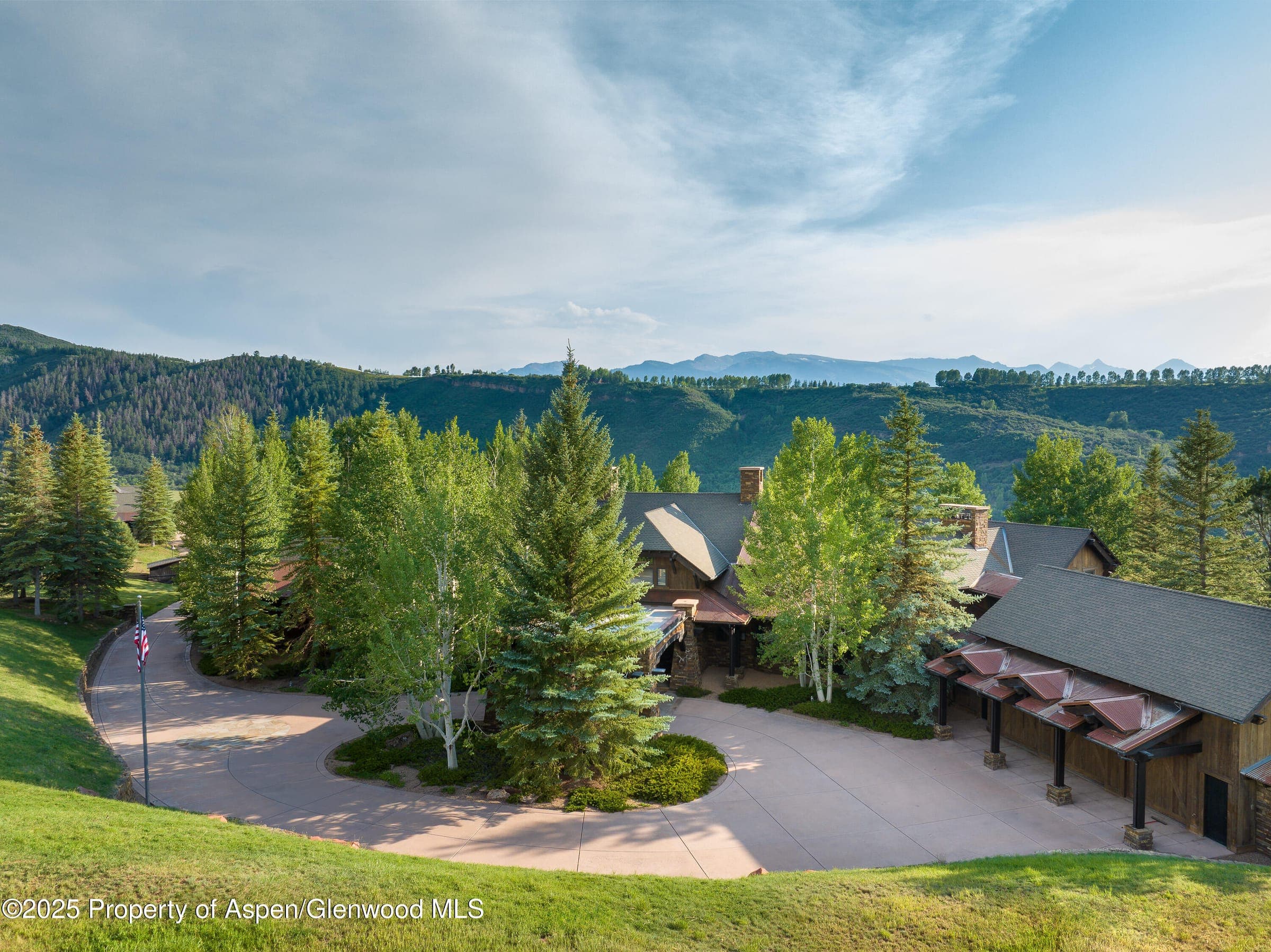
Cash vs Financing Aspen Luxury Real Estate
More than 70% of Aspen home sales close in cash. Discover why, what it means for your offer, and when financing is the smarter strategic move for affluent buyers.
Yes — most people pay cash for Aspen homes. More than 70% of Aspen transactions close in cash (The Aspen Times, 2025), which makes the Aspen market one of the most cash-dominated luxury markets in the United States. That single fact reshapes how a buyer should think about competing here. In a market where the 2025 median single-family sale price runs near $17.5 million (Aspen Times / Redfin, 2025), cash is not just common — it is often the assumption a seller starts from. Doug Leibinger, a Compass broker with more than 35 years in the Roaring Fork Valley, works with buyers on both sides of this question: those wiring the full purchase price, and high-net-worth buyers who could pay cash but choose jumbo, portfolio, or private-banking financing for reasons that have nothing to do with whether they can afford the home. This guide explains why the market leans cash, what that means when you write an offer, and when financing still makes strategic sense.
Short Answer
Most Aspen luxury homes are bought with cash — more than 70% of transactions close in cash (The Aspen Times, 2025) — because the buyer pool skews toward high-net-worth and international purchasers, and because a cash offer removes the financing contingency that sellers most want gone. For a buyer, competing in this market usually means being prepared to present proof of funds and close quickly. That said, cash is not automatically the right move for every buyer. Jumbo mortgages, portfolio loans, and private-banking lines of credit still make sense when a buyer would rather keep capital invested, wants to preserve liquidity, or is structuring the purchase for tax or estate reasons. The practical middle path many affluent buyers use is to win the deal as a strong, near-cash offer with a short or waived financing contingency, then finance after closing through a delayed-financing or cash-out arrangement. Whether you pay cash or finance, run the numbers with your own CPA and lender — this is a decision about your balance sheet, not just the house. For a full picture of the buying journey, start with the Aspen Luxury Home Buyer's Guide.
Why is the Aspen market so heavily cash-driven?
Aspen's buyer pool is unusual. The people purchasing on Red Mountain, in the West End, or at the base of Aspen Mountain (locals call it Ajax) are frequently entrepreneurs, executives, and international buyers whose wealth is not tied to a paycheck a lender can underwrite in the usual way. When more than 70% of Aspen transactions close in cash (The Aspen Times, 2025), it reflects who is buying as much as what they are buying.
Three forces reinforce the pattern:
Price tier. At a 2025 median single-family price near $17.5 million (Aspen Times / Redfin, 2025), many purchases sit well above conforming loan limits, so any financing here is jumbo or portfolio lending — a slower, more document-heavy process than a conventional loan.
Scarcity and speed. Pitkin County inventory has run roughly 40% below 2019 levels (SnowBrains, 2024), so desirable listings move fast and sellers can favor the cleanest offer. Cash is the cleanest offer.
Buyer profile. A large share of buyers already hold liquidity or can move assets quickly, so paying cash is simply less friction than assembling a jumbo loan under a tight closing timeline.
The result is a market where a financed offer is not disqualifying, but it does start a step behind unless it is structured carefully.
What does a cash-heavy market mean for buyers competing here?
If you are buying in Aspen, assume you are competing against cash. That has a few concrete implications.
First, proof of funds matters as much as pre-approval does elsewhere. A seller who can choose between two comparable offers will weigh the certainty of the close. A verified proof-of-funds letter or a recent brokerage statement carries the same signaling weight that a mortgage pre-approval carries in a conventional market.
Second, speed is leverage. A cash buyer can often close in two to three weeks because there is no lender appraisal, underwriting, or loan-commitment timeline to wait on. In a low-inventory market, the ability to close quickly is itself a negotiating chip — sometimes worth more to a seller than a marginally higher financed price.
Third, a financed offer needs to neutralize the seller's biggest fear: that the deal falls apart in underwriting. That is usually done by shortening or waiving the financing contingency, providing a strong pre-underwriting letter from a private bank, or increasing the earnest-money deposit. None of these are free — waiving a financing contingency shifts risk onto the buyer — so they are decisions to make with your broker and attorney, not defaults.
Doug Leibinger's practice leans heavily on off-market and pocket listings, where the competitive dynamics are quieter and a well-prepared financed buyer has more room to negotiate terms without a bidding war compressing the timeline.
When does financing still make sense for a high-value buyer?
Plenty of buyers who could write a check choose not to. Financing a luxury purchase is often a wealth-management decision rather than an affordability one. Common reasons a high-net-worth buyer finances an Aspen home:
Opportunity cost of capital. If a buyer's invested assets are expected to earn more than the after-tax cost of the loan, tying up $10–20 million in an illiquid house can be the more expensive choice. Financing keeps that capital working.
Liquidity preservation. Some buyers want cash available for their business, other investments, or simply as a reserve. A portfolio loan or securities-backed line of credit lets them buy the home without selling appreciated assets — and without triggering the capital-gains tax that selling would.
Estate and tax structuring. Debt on a property can play a role in estate planning and entity structuring. This is squarely a conversation for your CPA and estate attorney, not your broker.
Rate environment shifts. When borrowing costs are low relative to expected investment returns, financing looks more attractive; when they are high, cash looks better. Rather than quote a rate that will be stale by the time you read this, run current jumbo pricing with your lender and model it against your own return assumptions. You can sketch the monthly picture first with a mortgage calculator, then get real numbers from a private banker.
The instruments high-value buyers use here are not off-the-shelf mortgages: jumbo loans (above conforming limits), portfolio loans a private bank holds on its own books, and securities-backed lines of credit collateralized by an investment account rather than the home. Each has different speed, documentation, and flexibility profiles.
How do sellers perceive cash versus financed offers?
Sellers, and the listing brokers advising them, read an offer for one thing above all: the probability it closes on the agreed terms and timeline. Price matters, but certainty is what a low-inventory, high-value market prizes.
A cash offer signals maximum certainty — no appraisal that could come in low, no lender who could change terms, no financing contingency to unwind the deal. A financed offer introduces those variables, which is why identical dollar amounts are not identical offers. The gap narrows sharply, though, when a financed buyer comes in with strong pre-underwriting, a large deposit, and a short contingency period. Many closings in the Roaring Fork Valley are financed offers dressed to look almost as clean as cash.
Here is how the two approaches compare on the factors sellers and buyers actually weigh:
Factor All-Cash Jumbo / Portfolio Financing Speed to close Fast — often 2–3 weeks, no lender timeline Slower — appraisal, underwriting, and loan commitment add weeks Leverage on capital None — full purchase price is tied up in the home High — capital stays invested; property is partly financed Seller appeal Strongest — maximum certainty of close Strong when pre-underwritten with short/waived contingency Liquidity after purchase Lower — cash converted to an illiquid asset Higher — reserves and investments preserved Tax / estate flexibility Simpler, but no debt to structure around; possible gains if selling assets to fund it More planning options — discuss with your CPA and estate attorney Best fit Competitive bids, fast timelines, buyers prioritizing simplicity Buyers preserving capital, managing liquidity, or planning around tax/estate goals
This table is a starting framework, not advice for your situation. The right column can look very different depending on your balance sheet and the current rate environment.
Can you buy with cash and finance the home later?
Yes — and in a cash-driven market like Aspen, this is one of the most common strategies affluent buyers use to get the best of both. The approach is to win the deal as a cash buyer, closing quickly with no financing contingency, and then put a loan on the property after closing through a delayed-financing or cash-out refinance arrangement.
The logic is straightforward. As a cash buyer, you present the cleanest possible offer and close on the seller's timeline, which maximizes your leverage in negotiation. Once you own the home, you can arrange jumbo or portfolio financing on your own schedule, pull much of your capital back out, and redeploy it. You captured the competitive advantage of cash at the moment it mattered — the offer — without permanently locking up the capital.
There are rules and lender requirements around delayed financing, and the numbers only work in certain rate environments, so this is a plan to build with your lender and CPA before you write the offer, not after. It also requires having the cash available up front, which not every buyer does. But for buyers who have the liquidity, it neatly resolves the cash-versus-financing tension that this market creates.
How should you decide which path fits your purchase?
The decision comes down to four questions, and none of them are really about the house:
How competitive is the specific listing? For a hotly contested property or a fast-moving off-market deal, cash or a near-cash structure protects your position. For a home that has been listed a while, a well-prepared financed offer has more room.
What is the opportunity cost of your capital? Compare the after-tax cost of a jumbo loan against what that same capital earns invested. That single comparison drives most rational cash-versus-finance choices.
How much liquidity do you want to keep? If reserves matter for your business or peace of mind, financing preserves them.
What do your tax and estate goals require? This is a CPA-and-attorney question, and it can override the pure math.
Doug Leibinger's role is to structure the offer so it competes — whether that means presenting proof of funds for a fast cash close, or packaging a financed offer with the pre-underwriting and terms that make a seller comfortable. Before you decide how to fund a purchase, it helps to know what a home is actually worth in today's market; a current property valuation grounds the whole conversation. And if you are focused on the core market, the Aspen community guide covers the neighborhoods, price tiers, and inventory dynamics that shape how aggressive your offer needs to be. This article explains how the market tends to work — it is not financial, tax, or legal advice.
Frequently Asked Questions
Do people pay cash for Aspen homes?
Most do. More than 70% of Aspen transactions close in cash (The Aspen Times, 2025), which makes it one of the most cash-dominated luxury markets in the country. The buyer pool skews toward high-net-worth and international purchasers, and sellers in a low-inventory market place a premium on the certainty a cash offer provides. Financed offers still close here, but they generally need to be structured to look nearly as clean as cash.
Is a cash offer always better than a financed offer in Aspen?
Not for every buyer. A cash offer gives you the strongest negotiating position and the fastest close, which matters most on competitive listings. But paying cash ties up capital that might earn more invested elsewhere, and it can force the sale of appreciated assets that triggers capital-gains tax. Many affluent buyers instead win with cash and finance after closing, or present a strong pre-underwritten financed offer. The right answer depends on your balance sheet — confirm it with your CPA and lender.
What kind of loans do luxury buyers use in Aspen?
Because the 2025 median single-family price runs near $17.5 million (Aspen Times / Redfin, 2025), most purchases exceed conforming loan limits, so buyers use jumbo loans, portfolio loans held by a private bank, or securities-backed lines of credit collateralized by an investment account. These are slower and more document-intensive than conventional mortgages, which is part of why cash is so common. A private banker can price current options against your assets.
How fast can a cash buyer close on an Aspen home?
A cash purchase can often close in two to three weeks, because there is no lender appraisal, underwriting, or loan-commitment timeline to wait on. In a market where Pitkin County inventory has run roughly 40% below 2019 levels (SnowBrains, 2024), that speed is real leverage — a quick, certain close is sometimes worth more to a seller than a marginally higher financed price.
Can I make my financed offer competitive against cash buyers?
Yes. The goal is to neutralize the seller's fear that financing falls through. That usually means providing a strong pre-underwriting letter from a private bank, shortening or waiving the financing contingency, and increasing the earnest-money deposit. Each of these shifts risk toward you, so they are decisions to make with your broker and attorney. Done well, a financed offer can read to a seller almost like cash.
Should I pay cash or finance my Aspen purchase?
It depends on four things: how competitive the specific listing is, the opportunity cost of your capital, how much liquidity you want to preserve, and your tax and estate goals. Cash wins competitive deals and closes fast; financing preserves capital and liquidity. Many buyers combine both by closing in cash and financing afterward. This is a balance-sheet decision, so work through it with your CPA, lender, and a broker who understands the Aspen market.
Work With Doug Leibinger
Whether you plan to pay cash, finance through a private bank, or win the deal with cash and finance later, structuring the offer for this market is where a broker earns the fee. Doug Leibinger has spent more than 35 years in the Roaring Fork Valley and specializes in off-market and pocket listings across Aspen, Snowmass, Red Mountain, and Woody Creek. Talk through your purchase before you write the offer.
Phone: 970-379-9045
Contact: https://dougleibinger.com/contact
Not financial, tax, or legal advice. Consult your own advisors before deciding how to fund a purchase.
Thinking about a move in the Roaring Fork Valley?
Doug brings the access, discretion, and judgment this market requires, from off-market opportunities to a considered opinion of value on what you own today.