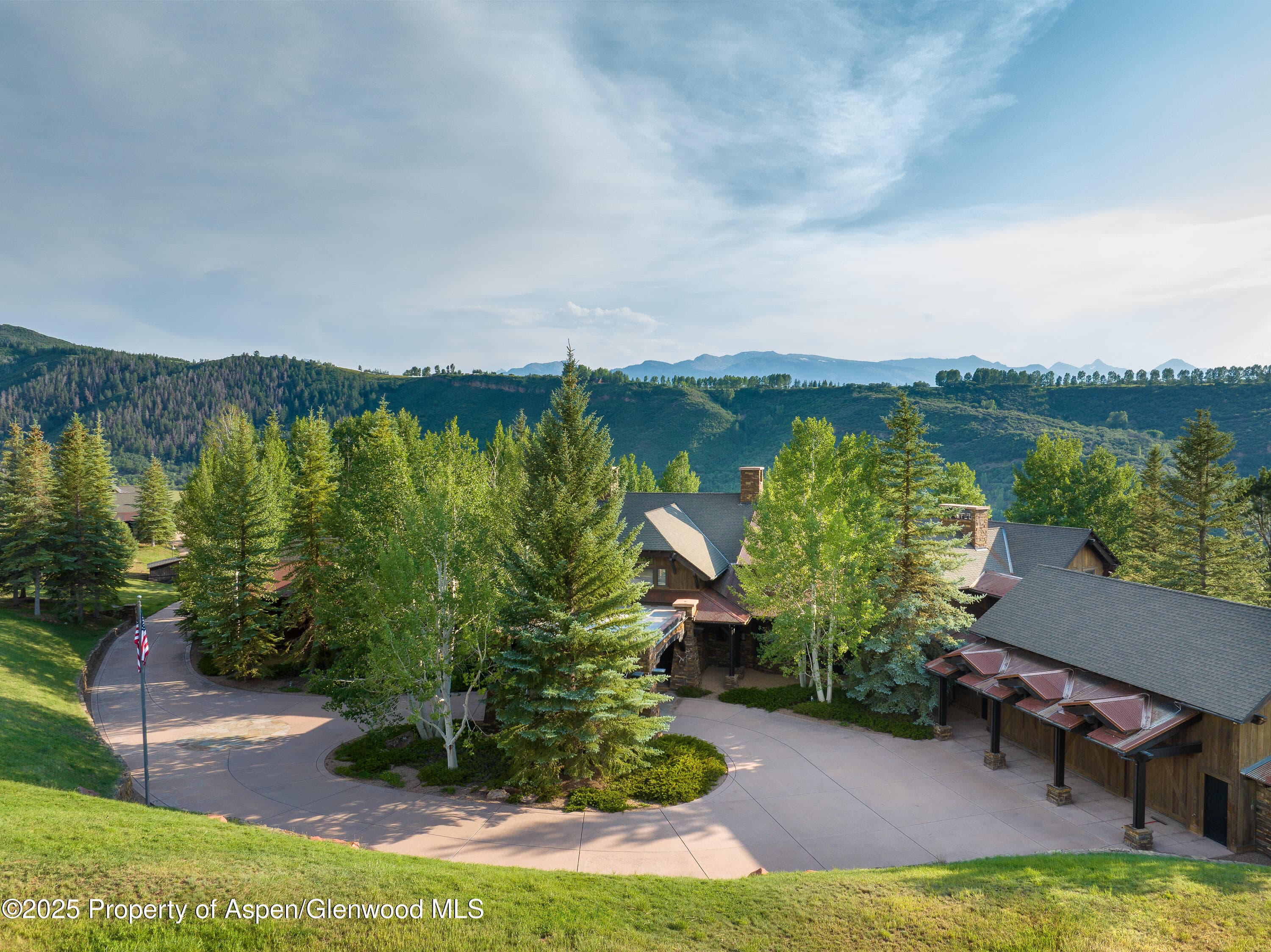
Aspen Luxury Home Buyers Guide
Learn how to buy a luxury home in Aspen's inventory-constrained, cash-heavy market. Choose the right submarket, access off-market listings, and close with confidence.
Buying a luxury home in Aspen is a different transaction than buying almost anywhere else in the country, and Doug Leibinger, a Compass broker with 30+ years in the Roaring Fork Valley, structures the process around that difference. Aspen is an inventory-constrained, cash-heavy market: more than 70% of Aspen-area transactions close in cash (Aspen Times real estate coverage, 2025), and Pitkin County active inventory has run roughly 40% below its 2019 level (Aspen Times, 2025). The 2025 median single-family sale price reached approximately $17.5M, up about 31% year over year (Aspen Times, 2025). In a market that thin, the meaningful decisions are made before you tour anything: which submarket fits how you'll actually use the home, what your budget realistically buys, whether you're paying cash or financing, and whether you have access to the off-market inventory that never reaches a public search. This guide walks the full buyer journey and links the deeper articles on each step.
Short Answer
To buy a luxury home in Aspen, start by choosing the submarket that matches your use — the walkable core near Aspen Mountain, the ski-in/ski-out base of Snowmass Village, the privacy of Red Mountain and McLain Flats, or the more attainable single-family neighborhoods down-valley in Basalt and Carbondale. Because Pitkin County inventory sits roughly 40% below 2019 (Aspen Times, 2025) and the 2025 single-family median is around $17.5M (Aspen Times, 2025), the best-fit homes are frequently sold off-market before they list publicly, so working with a broker who sees pocket listings matters more here than in most markets. Decide early whether you're paying cash — over 70% of local transactions do (Aspen Times, 2025) — or financing, since that shapes how competitive your offer reads to a seller. From there the path is: define your criteria, get shown both on- and off-market options, write a clean offer with the right contingencies, complete due diligence and inspections, and close. Doug Leibinger, a Compass broker in Aspen, handles buyers across Aspen, Snowmass, Woody Creek, Basalt, and Carbondale. Start with the featured listings or request a private buyer consultation at 970-379-9045.
Why Is Aspen A Different Market To Buy Into?
Aspen is not a large market that happens to be expensive; it is a small, supply-limited market where a handful of transactions can move the median. Pitkin County is geographically boxed in — surrounded by White River National Forest and wilderness — so there is no meaningful new-land frontier the way there is in a growing metro. That single fact drives most of the market's behavior. When active inventory runs roughly 40% below its 2019 level (Aspen Times, 2025), the constraint is not demand; it is available product.
The buyer pool is also unusual. Aspen draws out-of-state and international purchasers who often already own multiple homes, treat the purchase as a second or third residence, and value discretion. That profile is why more than 70% of Aspen transactions close in cash (Aspen Times, 2025) — many buyers are not solving a financing problem, they are solving a liquidity and timing problem. A cash-heavy, low-inventory market rewards speed, certainty, and access over almost everything else.
The practical consequence for you: the home you want may never appear on a public portal. Sellers of trophy property in Aspen frequently prefer a quiet, off-market process to protect price signals and privacy. That is where Doug Leibinger's positioning as an off-market and pocket-listing broker becomes the difference between seeing the full market and seeing only the slice that made it online. For the mechanics of that hidden inventory, see off-market and pocket listings in Aspen.
What Are Aspen's Submarkets And How Do They Differ?
The Roaring Fork Valley is really a chain of distinct submarkets strung along Highway 82, from the town of Aspen at the top down through Carbondale. They differ on price, home type, proximity to the ski mountains, privacy, and how you're likely to use the property. Choosing the right one is the highest-leverage decision you'll make, because it determines both your budget and your daily experience.
Aspen — the core. Walkable to Aspen Mountain (Ajax), the West End's Victorian streets, and the dining and culture downtown. The 2025 single-family median is roughly $17.5M and the condo median about $3.175M (Aspen Times, 2025). This is the most liquid, most globally recognized submarket.
Red Mountain — the ridge across from town, known for large parcels, long-range views back at Aspen Mountain, and a high concentration of the valley's most expensive estates. Privacy and view corridors drive value here.
McLain Flats — a rural bench between Aspen and the airport with larger lots, open space, and a quieter, land-first character while staying minutes from town.
Woody Creek — down-valley from Aspen, a mix of ranch parcels and rural residential, anchored culturally by the Woody Creek Tavern. Larger acreage and more privacy at a step down from core-Aspen pricing.
Old Snowmass — a broad, rural valley off Highway 82 with ranches, equestrian property, and single-family homes on acreage, distinct from the Snowmass Village ski base.
Snowmass Village — the ski-in/ski-out resort community at the base of Snowmass Mountain, with a median around $2.2M (Redfin, 2025). Strong for buyers who prioritize on-mountain access and rentable ski-season inventory.
Snowmass — the broader Snowmass area, spanning resort-adjacent and more residential pockets.
Basalt — down-valley at the confluence of the Roaring Fork and Fryingpan rivers, with a median around $1.4M, up about 17% year over year as of February 2026 (Movoto, Feb 2026). A more attainable entry into the valley with genuine single-family neighborhoods.
Carbondale — farther down-valley beneath Mount Sopris, with a median sold price around $1.59M (Redfin, 2025). The most attainable of the valley's core communities and popular with full-time residents.
Here is how the primary submarkets compare at a glance. Neighborhood descriptions below are factual — price, home type, and location only.
Submarket Typical Home Type Reference Median (dated/sourced) Location / Character Aspen (core) Single-family + condo ~$17.5M SFH / ~$3.175M condo (Aspen Times, 2025) Walkable to Aspen Mountain and downtown Red Mountain Estate homes, large parcels Among valley's highest (Aspen Times, 2025) Ridge across from town, view corridors Snowmass Village Ski-in/ski-out condo + SFH ~$2.2M (Redfin, 2025) Base of Snowmass Mountain Woody Creek Ranch + rural residential Below core Aspen (Aspen Times, 2025) Down-valley acreage and privacy Basalt Single-family neighborhoods ~$1.4M, +17% YoY (Movoto, Feb 2026) Roaring Fork / Fryingpan confluence Carbondale Single-family, full-time residential ~$1.59M median sold (Redfin, 2025) Down-valley beneath Mount Sopris
The spread from a ~$1.59M Carbondale median to a ~$17.5M Aspen single-family median tells you how much submarket selection matters. Two buyers with the same budget end up in very different homes depending on where they focus. For a fuller walkthrough of what specific budgets buy, see what $5M, $10M, and $20M+ buys in Aspen.
How Much Home Does Each Budget Actually Buy In Aspen?
Because the submarkets diverge so sharply, budget in Aspen is best thought of as "which market am I shopping," not "how many square feet." A useful way to frame the tiers:
Entry to the valley (roughly $1.5M–$4M): primarily Carbondale and Basalt single-family homes, plus some Aspen and Snowmass Village condos. The Carbondale median sold is around $1.59M (Redfin, 2025) and Basalt around $1.4M (Movoto, Feb 2026). An Aspen condo can sit in this range at the lower end, given a roughly $3.175M condo median (Aspen Times, 2025).
Core resort access (roughly $4M–$10M): Snowmass Village ski-in/ski-out homes and better Aspen condos and townhomes. Snowmass Village's ~$2.2M median (Redfin, 2025) means real single-family options exist below the Aspen single-family entry point.
Aspen single-family (roughly $10M–$25M): the range where you enter the town of Aspen's detached-home market, given a ~$17.5M single-family median (Aspen Times, 2025). Location within Aspen — West End, walkability to Ajax, view — drives the spread.
Trophy tier ($25M and up): Red Mountain estates, prime West End, and legacy parcels. For scale, Doug Leibinger represented the $77M Owl Creek Ranch, the most expensive residential sale in Colorado at the time of sale. Sales at this level are frequently handled off-market.
Because the median moved about 31% year over year in 2025 (Aspen Times, 2025), the line between these tiers shifts, and dated data matters. Always price against current comparable sales rather than last cycle's numbers. The notable sales record is a useful reference for what has actually traded at each level. The full tier-by-tier breakdown lives in what $5M, $10M, and $20M+ buys in Aspen.
Why Are So Many Aspen Homes Sold Off-Market?
Off-market — or "pocket" — listings are properties available for sale but not posted to the MLS or public portals. In most of the country they are a niche. In Aspen they are a structural feature of the top of the market, and understanding why explains a lot about how to buy here.
Three forces push Aspen's best inventory off-market. First, privacy: many owners are high-net-worth or public-facing and do not want their home, its interior, or the fact that they are selling broadcast online. Second, price control: a quiet sale avoids public days-on-market and price-reduction history that can weaken a seller's negotiating position. Third, scarcity: with inventory roughly 40% below 2019 (Aspen Times, 2025), a well-connected broker can often sell a property through relationships before a public launch is even necessary.
For a buyer, this creates a hard truth: if you only watch public listings, you are not watching the whole market. Access to pocket listings runs through broker relationships, and that access is uneven — it depends on who the listing side trusts to bring a qualified, discreet buyer. Doug Leibinger's practice is built specifically around this off-market channel. The detailed mechanics — how pocket listings are sourced, vetted, and transacted — are covered in off-market and pocket listings in Aspen.
Should You Pay Cash Or Finance An Aspen Luxury Home?
In a market where more than 70% of transactions close in cash (Aspen Times, 2025), the cash-versus-financing question is partly financial and partly competitive. A seller weighing two similar offers will usually favor the one with fewer ways to fall apart, and an all-cash offer with no financing contingency reads as more certain and often faster to close.
That does not mean you must pay cash. Many sophisticated buyers finance even when they could pay cash, for tax, liquidity, or portfolio reasons, and jumbo and portfolio lenders actively serve this market. The point is to make the financing invisible to the seller as a source of risk: strong pre-approval or proof of funds, a realistic appraisal strategy in a fast-moving market, and a timeline that does not lag a competing cash offer. Financing a luxury Aspen home is entirely workable — it just has to be structured so it doesn't cost you the deal.
Which path is right depends on your broader financial picture, and it interacts with how you'll offer and what contingencies you carry. The trade-offs, including how appraisals behave when the median is moving about 31% a year (Aspen Times, 2025), are laid out in cash vs financing in Aspen luxury real estate.
What Does The Aspen Search, Offer, And Closing Process Look Like?
The transaction itself follows a recognizable arc, but each stage has Aspen-specific wrinkles worth planning for.
Define criteria. Before touring, you and your broker translate how you'll use the home — ski access, walkability, privacy, acreage, rental potential — into a submarket and a budget. In a low-inventory market this focus is what lets you move fast when the right property surfaces.
See the full market. A well-connected broker shows you both public listings and off-market opportunities. Given how much trades quietly here, this step is where access either widens or narrows your options. Start browsing the featured listings to calibrate.
Write the offer. A clean Aspen offer signals certainty: appropriate proof of funds or pre-approval, sensible contingencies, and terms matched to the seller's priorities. In a cash-dominant market (Aspen Times, 2025), overloading an offer with contingencies can cost you against a simpler competing bid.
Due diligence and inspections. Mountain property carries its own checklist — water rights, well and septic on rural parcels, access and easements, HOA or metro-district rules, short-term-rental regulations, wildfire considerations, and title. Woody Creek, Old Snowmass, and McLain Flats parcels in particular can involve land and water questions that a core-Aspen condo never touches.
Closing. Colorado closings run through title and escrow, and luxury transactions add layers — entity purchases, wire security, and coordination among attorneys and advisors. The full step-by-step, including timelines and who does what, is covered in the Aspen luxury closing process.
If you're purchasing from another state or country, the logistics — remote showings, remote closing, travel, and getting oriented to the valley — deserve their own plan; see buying in Aspen from out of state.
How Does A Connected Broker Change Your Access In Aspen?
In a large, high-inventory market, most homes are visible to everyone, and a broker's main value is execution. Aspen inverts that. With inventory roughly 40% below 2019 (Aspen Times, 2025) and a meaningful share of trophy property selling off-market, a broker's relationships determine what you even get to see. Access is the product.
Doug Leibinger practices at Compass, ranks as the #2 Compass agent in Colorado, and was ranked #72 among U.S. brokers in 2022 (WSJ/RealTrends). Across 30+ years in the Roaring Fork Valley he has closed more than $1.85 billion in career volume and represented the $77M Owl Creek Ranch, the most expensive residential sale in Colorado at the time. For a buyer, the practical value of that track record is threefold: he sees pocket listings other buyers never hear about; listing-side brokers trust that a buyer he brings is qualified and discreet, which matters when a seller is choosing whom to transact with quietly; and he knows the submarket-specific due-diligence traps that can turn a beautiful home into a difficult purchase.
Access, discretion, and local judgment are not marketing abstractions in this market — they are the mechanism by which deals actually get done. That is the case for working with a broker whose practice is built on relationships rather than portal traffic.
What Should You Do Before You Start Touring?
A few steps make the rest of the process dramatically smoother. Get your proof of funds or financing pre-approval in order early, since sellers weigh certainty heavily in a cash-driven market (Aspen Times, 2025). Decide, at least provisionally, on a primary submarket and a backup, using the comparison above and the individual community pages for Aspen, Snowmass Village, Basalt, and Carbondale. If you own a home already and are financing the next purchase against it, get a current sense of its value using the home valuation tool. And connect with a broker early — in a low-inventory market, being ready to move when an off-market property surfaces is often the whole game.
Work With Doug Leibinger
Doug Leibinger helps buyers navigate the full Aspen and Roaring Fork Valley market — from Carbondale and Basalt up through Snowmass Village, Woody Creek, Red Mountain, and the core of Aspen — including the off-market inventory that never reaches a public search. If you're planning a purchase, the most valuable first conversation is about how you'll use the home, what your budget realistically buys, and how to be positioned to move when the right property appears.
Service areas: Aspen, Snowmass, Snowmass Village, Woody Creek, Old Snowmass, Basalt, Carbondale, Red Mountain, McLain Flats — the Roaring Fork Valley
Office: 117 S Monarch St, Main Level, Aspen, CO 81611
Phone: 970-379-9045
Email: doug@compass.com
Contact: Find My Dream Home
Call Doug at 970-379-9045 or start the conversation here.
Frequently Asked Questions
How much does it cost to buy a luxury home in Aspen?
It depends heavily on submarket. The 2025 single-family median in the town of Aspen was approximately $17.5M, up about 31% year over year (Aspen Times, 2025), while the Aspen condo median was about $3.175M. Down-valley is more attainable: Snowmass Village runs around a $2.2M median (Redfin, 2025), Basalt about $1.4M (Movoto, Feb 2026), and Carbondale roughly $1.59M median sold (Redfin, 2025). Because prices move quickly, always price against current comparable sales.
Do I need to pay cash to buy in Aspen?
No, but you should understand why so many buyers do. More than 70% of Aspen-area transactions close in cash (Aspen Times, 2025), and an all-cash offer reads as more certain to a seller. Financing is entirely workable with strong pre-approval and a well-structured timeline, and many buyers finance for tax or liquidity reasons even when they could pay cash. The trade-offs are covered in cash vs financing in Aspen luxury real estate.
Why can't I find the best Aspen homes online?
Because a meaningful share of Aspen's top inventory is sold off-market. With active inventory roughly 40% below 2019 (Aspen Times, 2025) and sellers prioritizing privacy and price control, well-connected brokers often transact pocket listings before any public launch. Seeing that inventory depends on broker relationships. See off-market and pocket listings in Aspen.
Which Aspen submarket is right for me?
Match the submarket to how you'll use the home. Choose the town of Aspen for walkability to Aspen Mountain and downtown, Snowmass Village for ski-in/ski-out access, Red Mountain or McLain Flats for privacy and large parcels, and Basalt or Carbondale for more attainable single-family neighborhoods down-valley.
Can I buy a home in Aspen from another state or country?
Yes. Many Aspen buyers purchase from out of state or abroad, which is one reason the market is so cash-heavy (Aspen Times, 2025). Remote showings, remote closing, and coordinated travel make it manageable, but the logistics benefit from planning. See buying in Aspen from out of state.
What does due diligence involve on an Aspen luxury home?
Beyond a standard inspection, mountain and rural property can involve water rights, well and septic systems, access and easements, HOA or metro-district rules, short-term-rental regulations, wildfire considerations, and title review — especially on parcels in Woody Creek, Old Snowmass, and McLain Flats. The full transaction arc, including closing, is detailed in the Aspen luxury closing process.
How do I get started with Doug Leibinger?
Call Doug Leibinger at 970-379-9045 or reach out through the contact page. A first conversation typically covers your intended use, budget, and target submarkets, and gets you positioned to see both public and off-market inventory. You can also browse featured listings or estimate a home you already own with the valuation tool.
Thinking about a move in the Roaring Fork Valley?
Doug brings the access, discretion, and judgment this market requires — from off-market opportunities to a considered opinion of value on what you own today.