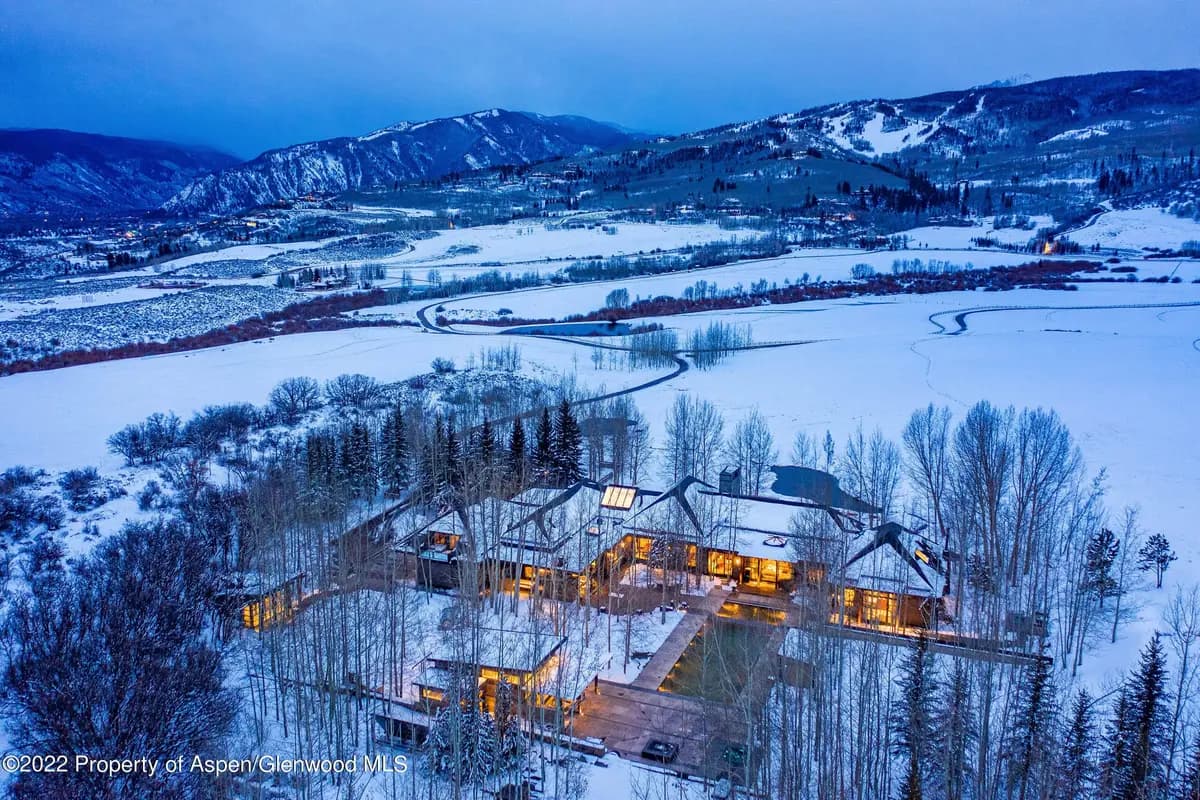
Aspen vs. Basalt: Where Should Luxury Buyers Live?
Compare Aspen and Basalt homes through arrival, transit, parking, neighborhood, closing-cost, and rental-rule tests tied to an exact address.
Aspen and Basalt can both support a rewarding life in the Roaring Fork Valley, but they optimize for different ownership patterns. Aspen puts the airport, downtown, dining, cultural venues, and in-town recreation close together. Basalt can fit buyers whose week is oriented around a broader neighborhood mix, more down-valley services, or a different relationship with the car.
The useful question is not which town is universally better. It is which exact property supports the way you will arrive, move through the valley, host guests, manage the home, and use it across the seasons.
My Aspen luxury home buyer's guide maps the larger submarkets, while my out-of-state buyer guide covers remote tours, travel planning, and ownership logistics. This comparison adds a narrower tool: an operating-model test for choosing between specific Aspen and Basalt homes.
Start with a real seven-day use calendar
Before comparing listings, write the week you expect to live.
Include:
- arrival airport, arrival time, and frequency;
- ski days, trail days, dining, cultural events, and appointments;
- work, school, errands, groceries, and household services;
- guest arrivals and their transportation;
- property-management, maintenance, and vendor visits;
- trips into Aspen at peak and ordinary hours; and
- the number and type of vehicles that must fit at the property.
Then mark each activity as daily, weekly, monthly, or occasional. A home that feels perfectly placed for a holiday weekend may create unnecessary friction during a six-week stay. Conversely, a longer drive may matter less to a buyer who visits Aspen only a few times per week and values a different neighborhood form at home.
This calendar becomes the acceptance standard for the shortlist.
Arrival and transportation: model the repeated trip
Aspen/Pitkin County Airport is about three miles from downtown Aspen. The airport's ground transportation guidance lists taxis, limousines, hotel shuttles, and authorized rideshare pickup. Its traveler information also states that RFTA bus service from the airport into Aspen and Snowmass Village is free.
That proximity can be valuable for an Aspen buyer with frequent arrivals, short stays, or guests who will not have a car. It does not establish door-to-door time for a particular home, flight, season, or weather event.
Basalt is connected to Aspen by RFTA. For the 2026 spring, summer, and fall season, RFTA lists a Basalt-to-Aspen zone pass at $545 for non-chamber purchasers and $518 for chamber purchasers; El Jebel is included in the Basalt zone. Those are dated 2026 figures, not permanent assumptions.
For a Basalt candidate, verify:
- the nearest stop and safe route to it;
- the current schedule for the days and hours you will ride;
- the complete door-to-door time, including transfers or parking;
- late-evening and seasonal service; and
- the backup plan for weather, equipment, guests, and missed connections.
Do not publish or underwrite a commute time from a town name. Test the exact address at the times you would actually travel.
Parking and car dependence belong in the property scorecard
Aspen updated municipal parking rates effective February 16, 2026. The City's current notice describes peak-period downtown hourly rates that vary by time and season and a $15 daily maximum at the Rio Grande garage. Recheck the current program before relying on those numbers.
Basalt's official parking page says town parking is free, but it is not unrestricted. Different locations carry 72-hour, 24-hour, or two-hour limits.
Neither town-level statement proves that a home has adequate private parking. For every property, separate:
- enclosed garage dimensions and access;
- driveway or assigned private spaces;
- guest spaces and any time limits;
- HOA restrictions on vehicles, equipment, or overnight parking;
- snow removal and winter access; and
- the public parking you may use but do not control.
A garage shown in listing photographs may not work for the buyer's actual vehicles, storage, charging, or guest pattern. Measure and verify it.
Basalt is not one uniform neighborhood
The Town of Basalt identifies several distinct areas in its neighborhood overview, including Historic Downtown and Southside, Willits, and a broader community that includes El Jebel, Blue Lake, Missouri Heights, and other areas.
That means “Basalt” is too coarse for a defensible shortlist. A Historic Downtown property, a Willits residence, and a home outside municipal limits can have different walking patterns, parking, services, governing bodies, taxes, utility arrangements, and ownership rules.
The Town's current parks and mobility work also includes pedestrian and bicycle safety improvements around the Emma and Two Rivers corridor and Confluence Park, documented through its Parks, Open Space and Trails Committee. Treat planned or active work as dated context, not a guarantee of future completion or a substitute for testing the route from the property.
Aspen likewise maintains official parks, open-space, hiking, biking, equestrian, and Nordic-trail resources. Compare the access that matters to you from the exact address rather than relying on a generic mountain-town description.
Closing costs and rental rules are address-level questions
For property inside Aspen city limits, the City states that buyers are responsible for two real estate transfer taxes: 0.5% for the Wheeler/arts purpose and 1.0% for housing. The first $100,000 is excluded from the 1.0% tax base, and exemptions may apply.
That is not a closing statement. Ask the title company and appropriate advisers to confirm jurisdiction, consideration, exemptions, and the exact calculation for the transaction.
Short-term rental assumptions require the same discipline. Basalt's short-term rental business-license page says an annual sales-tax license and STR business license are required before advertising or renting a dwelling for fewer than 30 consecutive days. For 2026, the Town lists a $2,532-per-bedroom annual regulatory fee, along with a limited primary-residence and 60-day exemption process, and notes that its lodging-tax rate increased in January 2026.
Aspen separately administers lodging and short-term rental taxes. A postal address, prior rental history, or valley-wide label does not prove current eligibility, licensing availability, transferability, permitted days, tax treatment, safety compliance, or HOA approval.
Before using rental income in the ownership model, verify:
- the exact municipality or county jurisdiction;
- current license availability and transfer rules;
- taxes, regulatory fees, inspections, and safety requirements;
- HOA, condominium, deed, and lender restrictions;
- insurance treatment; and
- a conservative operating budget that does not depend on guaranteed occupancy.
Use an address-level decision matrix
Score the properties, not the town names. Use verified, observed, pending, conflicting, or unknown for every line.
| Buyer-use test | Aspen candidate | Basalt candidate | Evidence required |
|---|---|---|---|
| Arrival pattern | Airport route, ground transport, tested door-to-door trip | ||
| Weekly Aspen trips | Current RFTA stop and schedule, peak and ordinary drive tests | ||
| Private parking | Survey, garage measurements, assigned spaces, HOA rules | ||
| Daily services | Exact-address routes for groceries, work, school, health, and vendors | ||
| Recreation access | Buyer-priority trail, ski, park, or river routes tested from the home | ||
| Guests and management | Guest transport, parking, access, property-manager and vendor plan | ||
| Closing costs | Jurisdiction, title estimate, taxes, HOA, insurance, utilities | ||
| Rental underwriting | Current license, taxes, fees, restrictions, insurance, HOA evidence |
Remove a property if it fails a hard requirement. If a material line is unknown, assign an owner and next action before the home reaches the final shortlist.
Make two verification visits
One scouting trip can confirm impressions. Two deliberately different visits can test an ownership pattern.
Visit one: peak conditions
- Arrive as you normally would.
- Travel the real airport-to-property route.
- Test a busy Aspen trip, parking, dining, and return.
- Observe the immediate property and neighborhood at more than one hour.
- Check guest access, garage fit, snow-management assumptions, and equipment storage.
Visit two: an ordinary weekday
- Complete groceries, work, school, health, or household-service routes.
- Ride the transit trip you expect to use.
- Meet the property manager and relevant local professionals.
- Review utilities, insurance, HOA, title, inspection, and jurisdiction records.
- Repeat any route or property observation that felt uncertain during the peak visit.
Neither visit replaces inspection, survey, title work, legal or tax advice, insurance underwriting, or HOA review. The goal is to learn whether the daily system works before the transaction becomes emotionally or financially difficult to unwind.
Frequently asked questions
Is Aspen or Basalt better for a second home?
Neither is universally better. Compare exact properties against arrival frequency, time spent in Aspen, car and parking needs, guest use, recurring services, and jurisdiction-specific costs.
Can I live in Basalt and use transit to reach Aspen?
Yes, RFTA publishes service and a Basalt-to-Aspen seasonal zone pass. Verify the current stop, schedule, total door-to-door time, late-evening service, and seasonal changes for the exact home before relying on it.
Does buying in Aspen add a transfer tax?
The City states that buyers are responsible for 0.5% and 1.0% municipal real estate transfer taxes, with a limited deduction from the housing-tax base and possible exemptions. Have the title company calculate the exact amount for the transaction.
Can I short-term rent a home in Aspen or Basalt?
Possibly, but no town-level answer proves eligibility. Verify the exact jurisdiction, current license availability, taxes, fees, permitted days, safety requirements, and HOA or deed restrictions before making income assumptions.
What should I test during an Aspen-versus-Basalt scouting trip?
Drive or ride the real routes at the times you would use them, test parking and errands, visit the immediate neighborhood at different hours, and obtain address-level tax, HOA, insurance, utility, and rental-rule records.
Build a private Aspen-and-Basalt shortlist
Send me your primary-residence, second-home, or seasonal-use plan; arrival airport and frequency; expected weekly trips into Aspen; walkability, garage, guest-parking, ski-access, and property-management needs; rental-income assumptions; budget; and target property type.
I will build an address-level comparison of two or three candidate properties around that real weekly pattern, including access, parking, jurisdiction, HOA, closing-cost, and ownership-rule questions.
Request a private shortlist session with Doug Leibinger.
Sources and dated figures reviewed August 20, 2026. Parking, transit fares and schedules, taxes, fees, licensing, public projects, and property conditions change. Recheck every source for the exact address before relying on it in a purchase decision.
Continue Reading
Related guides
Basalt vs. Carbondale: Compare the Property, Not Just the Town
Compare Basalt and Carbondale homes by exact-address rules, housing form, Aspen transit, documents, and ongoing ownership obligations.
Aspen Luxury Real Estate Market, Fall 2026: Prices & Data
Aspen in fall 2026: 185 active listings at a $9.8M median ask, recent sales near 91% of list, and the biggest 2026 closings, with Estin data on 2025 and the first-half slowdown.
Comparing $5M, $10M and $20M+ Aspen Home Budgets
A practical framework for comparing Aspen properties by current evidence rather than fixed price-tier promises.
An Aspen Address or More Space? Start With the Property Mix
Compare Aspen, Snowmass Village and Old Snowmass through a selected 84-listing sample, with clear distinctions between location, home type and asking price.
Thinking about a move in the Roaring Fork Valley?
Doug brings the access, discretion, and judgment this market requires, from off-market opportunities to a considered opinion of value on what you own today.